How Does a Garage Door System Work?
A garage door looks simple from the driveway, but the opener, springs, tracks, rollers, and safety controls all share the work.
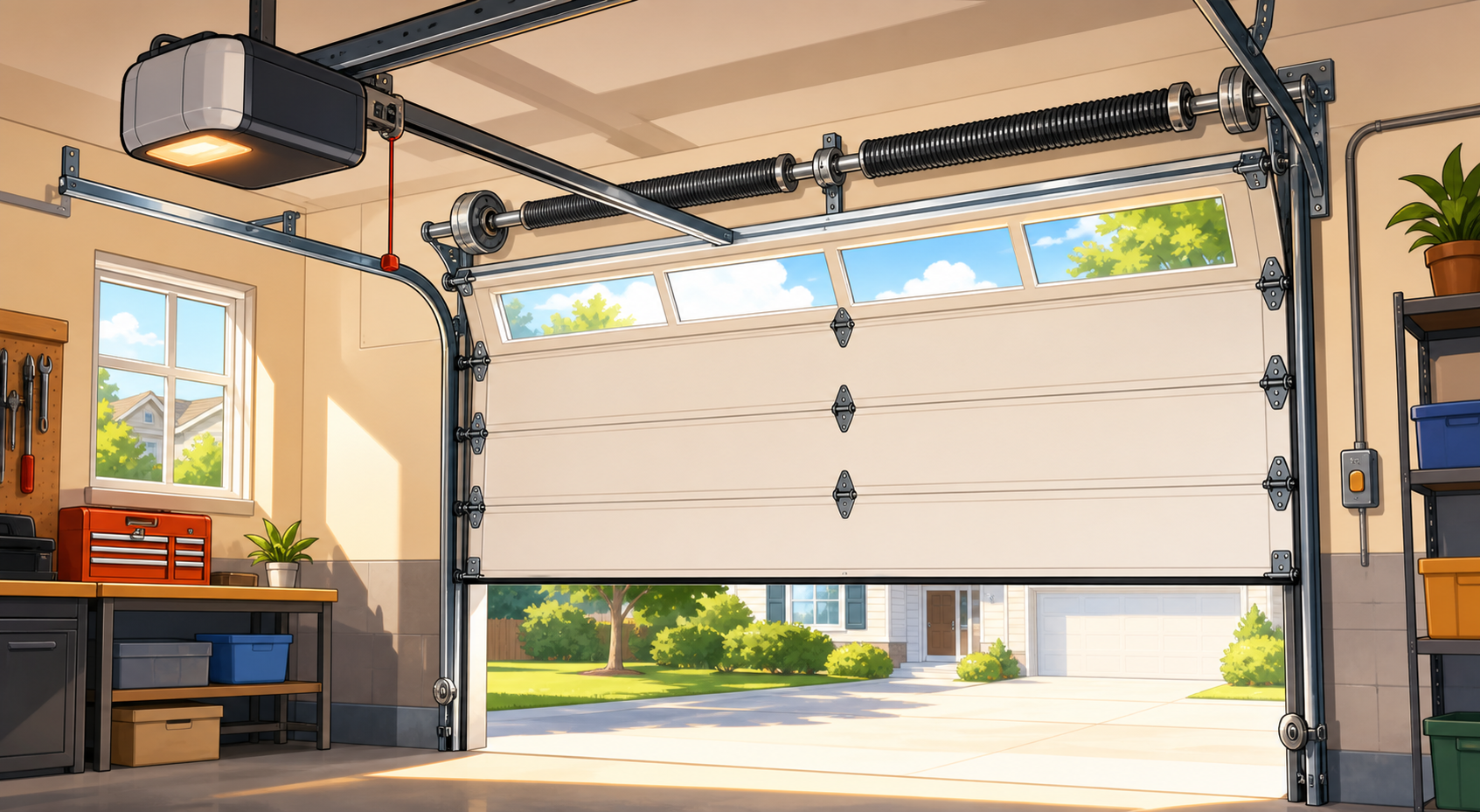
The opener starts the movement
Most automatic garage doors use a ceiling-mounted opener. When you press a remote, wall button, or keypad, the opener receives the signal and starts the motor.
That motor does not lift the full door by itself. Instead, it drives a belt, chain, or screw system that guides the door while the springs carry much of the weight.
Springs balance the heavy door
Garage doors are heavy, so the spring system is what makes the door manageable. Torsion springs usually sit above the door, while extension springs run along the sides on some setups.
As the door closes, the springs store energy. As the door opens, that stored energy helps lift the panels smoothly and reduces strain on the opener.
Tracks and rollers guide each panel
The door panels move on rollers that sit inside metal tracks. These tracks keep the door aligned as it travels up, curves overhead, and comes back down.
If a roller is worn, a hinge is loose, or a track is bent, the door can become noisy, shaky, or difficult to move.
Controls and safety parts keep it usable
A complete system also includes remotes, wall controls, photo-eye sensors, brackets, cables, and hinges. These parts make daily operation more convenient and help stop the door when something is in the way.
When everything is adjusted correctly, the door should move steadily, seal well, and stop without slamming or jumping.